
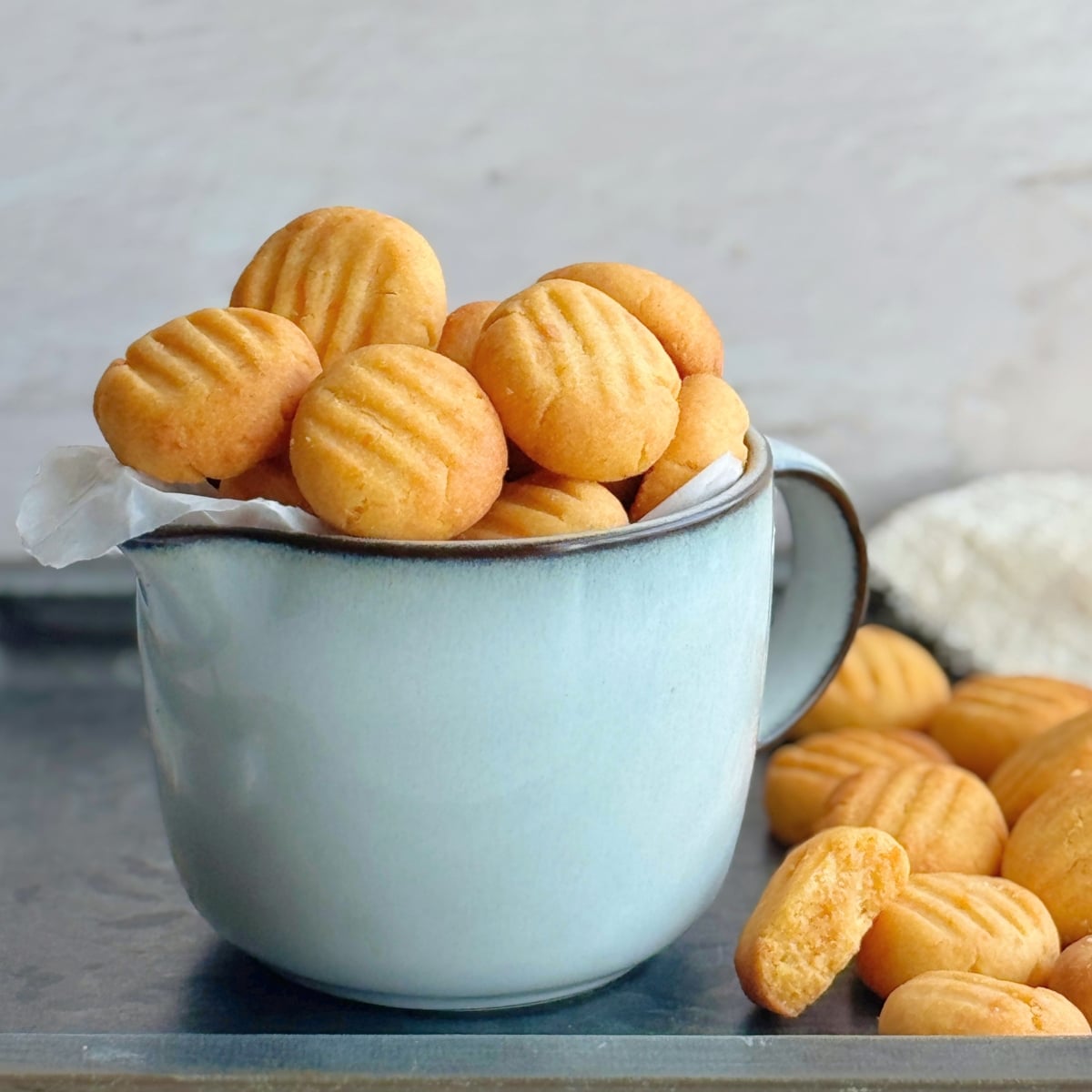
These Mini Sweet Potato Butter Cookies are buttery, crisp and perfectly bite-sized. Each one uses about 1 teaspoon (8 g) of dough, and just five ingredients make a batch of 42.
Step by step photos
These visual instructions help you see the process. You can also find the full printable recipe with ingredient amounts and instructions at the end of the post.
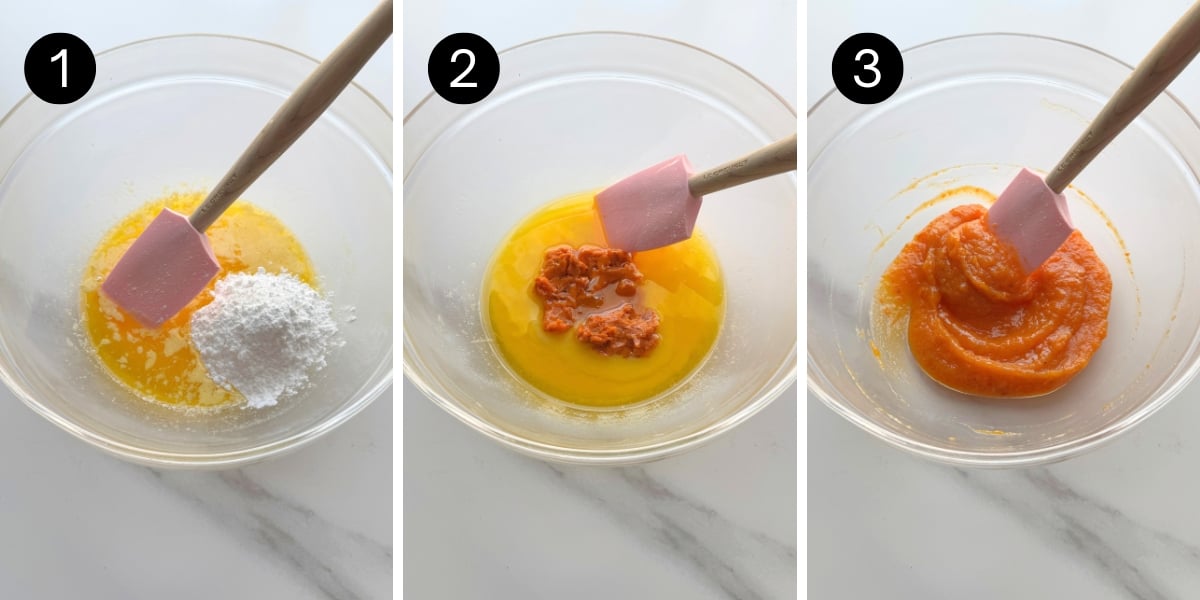
- Mix the butter and sugar: Melt the butter and leave to cool for 5 minutes. Add the powdered sugar and stir until smooth.
- Add the mashed roasted sweet potato and vanilla extract if using
- Stir until evenly combined.
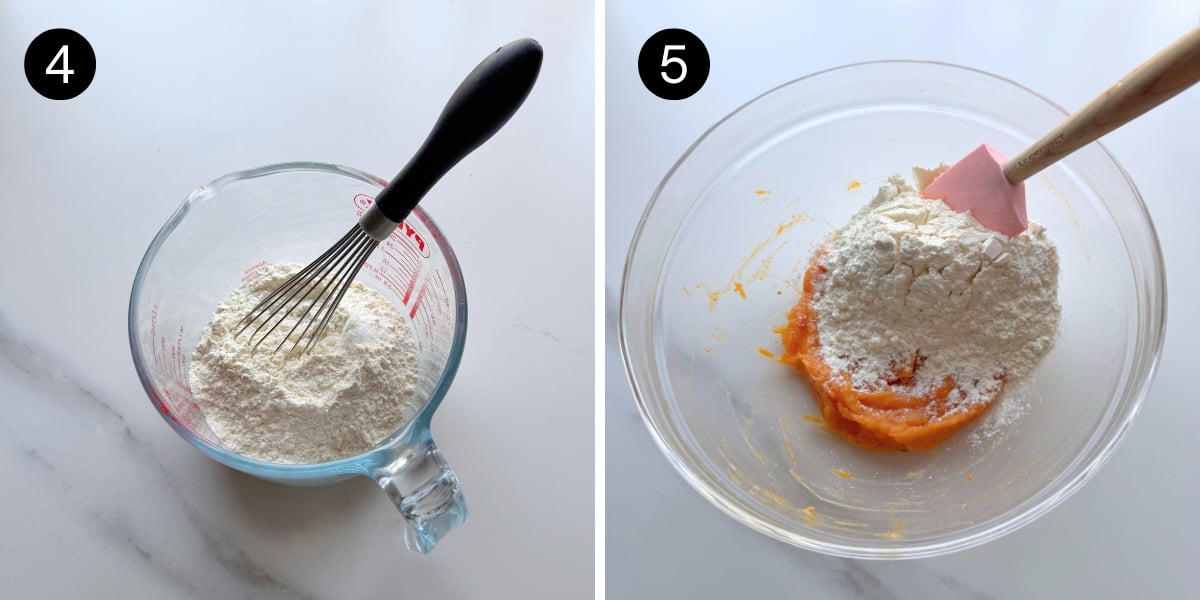
- Flour mixture: In a separate bowl, whisk together the flour and salt. Add the cinnamon here, if using.
- Add the flour mixture to the sweet potato mixture and fold with a spatula until mostly combined.
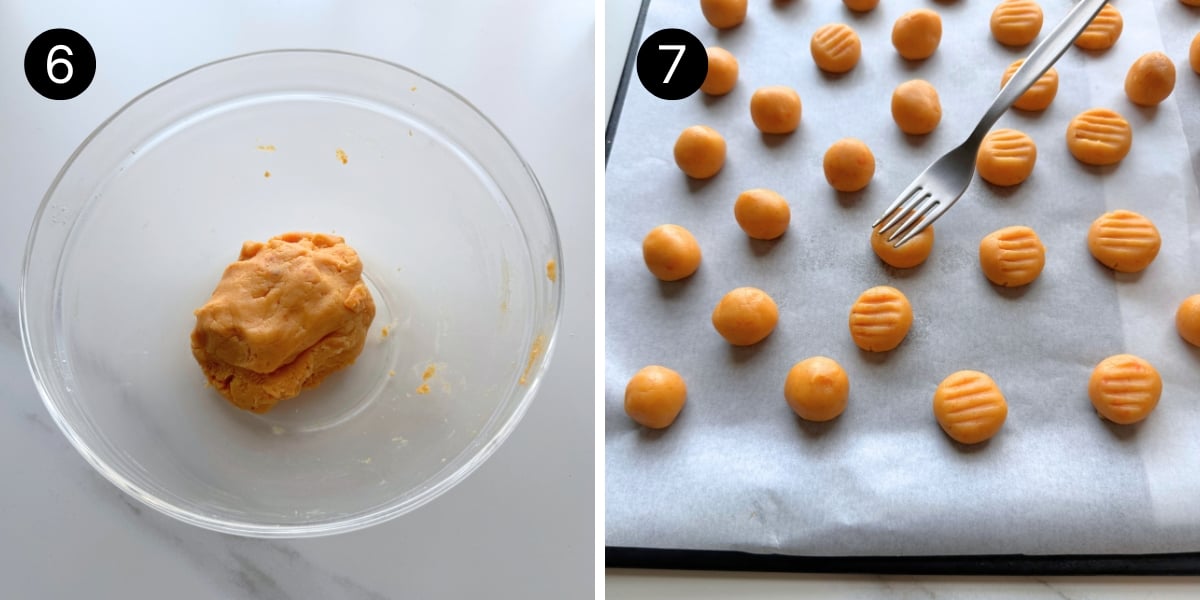
- Use your hands to gently bring the mixture together into a soft dough.
- Portion the dough into 8 g (about 1 teaspoon) pieces and roll into balls. Place about 2 inches (5 cm) apart on a parchment-lined baking sheet, then gently press each one with a fork.
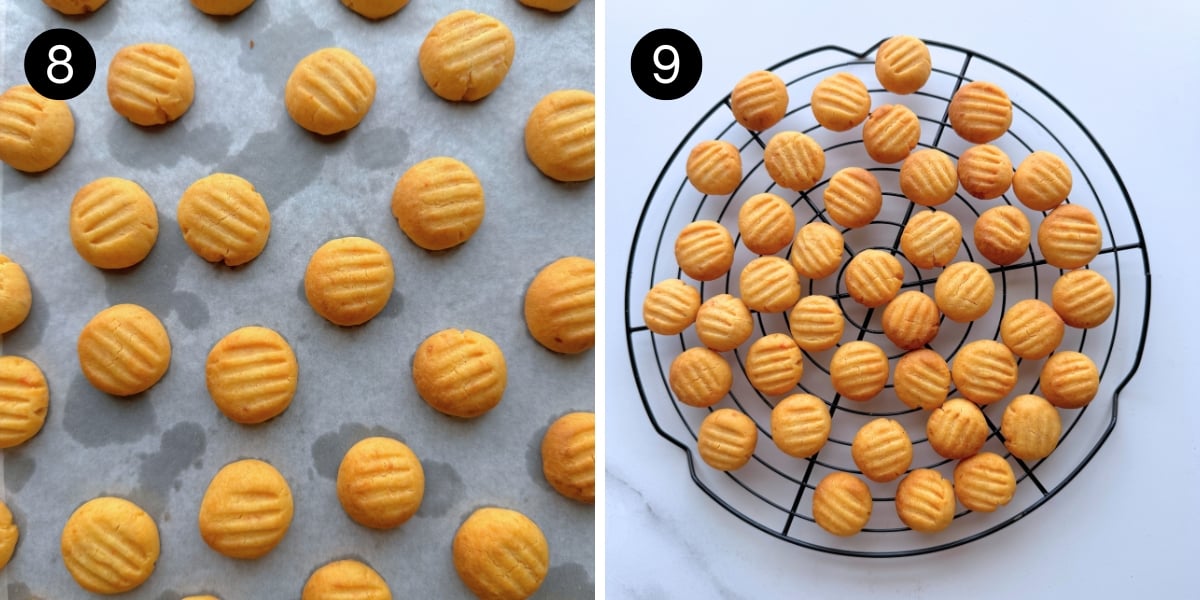
- Bake for 10–12 minutes. Remove from the oven and leave the cookies on the baking sheet for 5 minutes.
- Transfer to a wire rack to cool completely. The cookies will firm up as they cool.
Which sweet potato to use
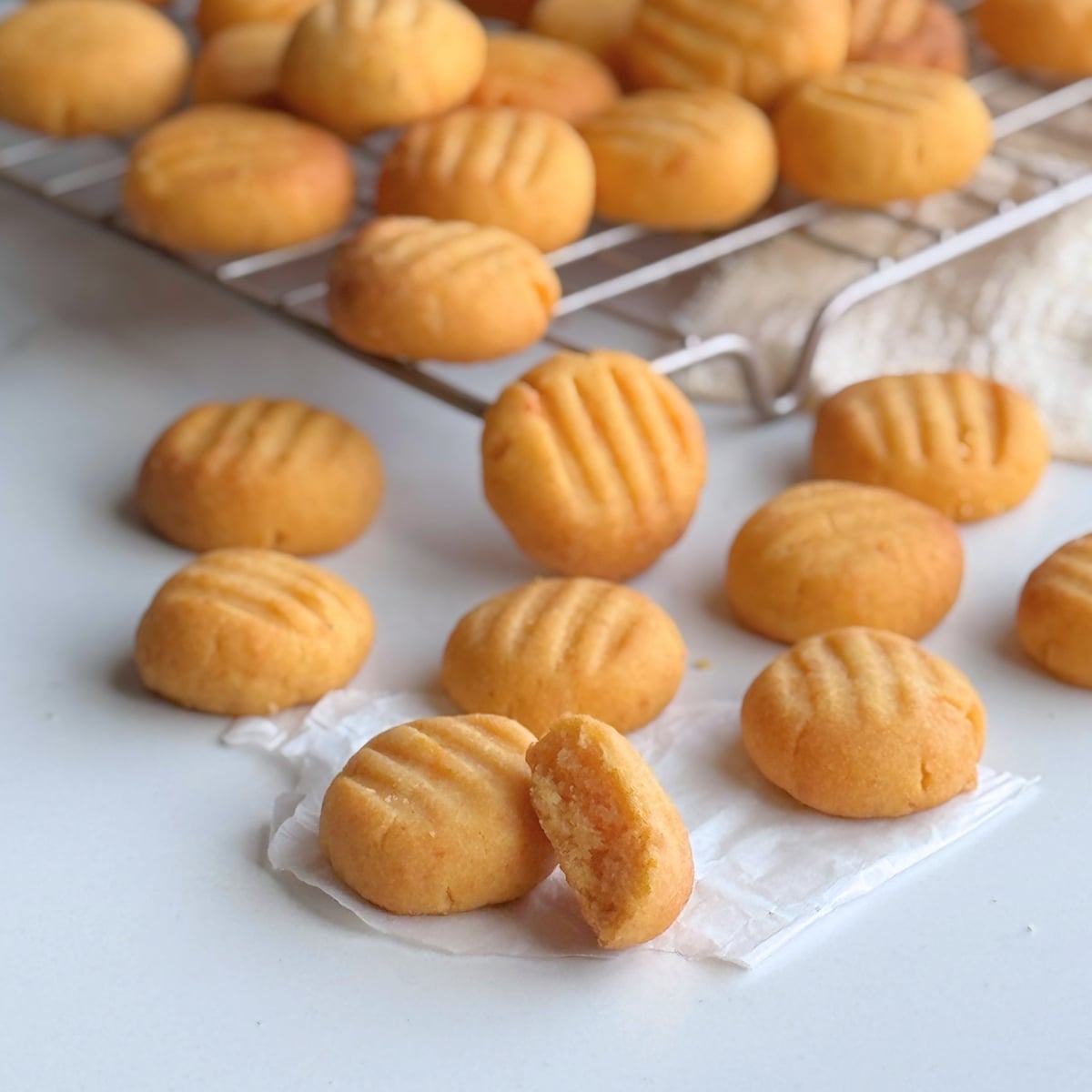
Orange sweet potatoes such as Beauregard, Jewel or Garnet are best for these cookies. They have a softer, creamier texture when roasted and give the cookies their orange color.
- White sweet potatoes are usually drier and starchier, so the dough may be firmer and the cookies less orange.
- Purple sweet potatoes are also drier and denser and will change both the color and texture.
- For the closest result to my recipe, stick with an orange variety.
How to prepare the sweet potato
- Roast rather than boil or steam: I roast the sweet potato because it keeps the mash thick without adding extra water. Boiled or steamed sweet potato can contain more moisture, which can make the cookie dough softer and more difficult to handle.
- Roast it plain: Don’t add oil, butter or seasoning. Once soft, remove the peel and mash the sweet potato until smooth.
- Let it cool: Let the mashed sweet potato cool for about 20 minutes, then measure ¼ cup (60 g) for the dough.
- Mash, don’t blend: Mash the sweet potato with a fork until smooth. Don’t blend or process it, as this can make the sweet potato sticky and affect the texture of the cookie dough.
Cinnamon and vanilla are optional
- I didn’t use vanilla or cinnamon because I wanted the sweet potato to be the main flavor.
- You can add ½ teaspoon vanilla extract or ¼ teaspoon ground cinnamon, or both if you prefer. I’ve included where to add them in the recipe steps below.
Can the dough be prepared in advance?
- Yes. Prepare the dough, cover and refrigerate for up to 2 days. You can also portion and roll the dough into 1 teaspoon (8 g) balls before refrigerating.
- Leave the chilled dough at room temperature for 5–10 minutes, or until soft enough to press with a fork. If it presses easily straight from the fridge, you can bake it straight away.
- Cookies baked straight from the fridge may need an extra 1–2 minutes in the oven.
Storage
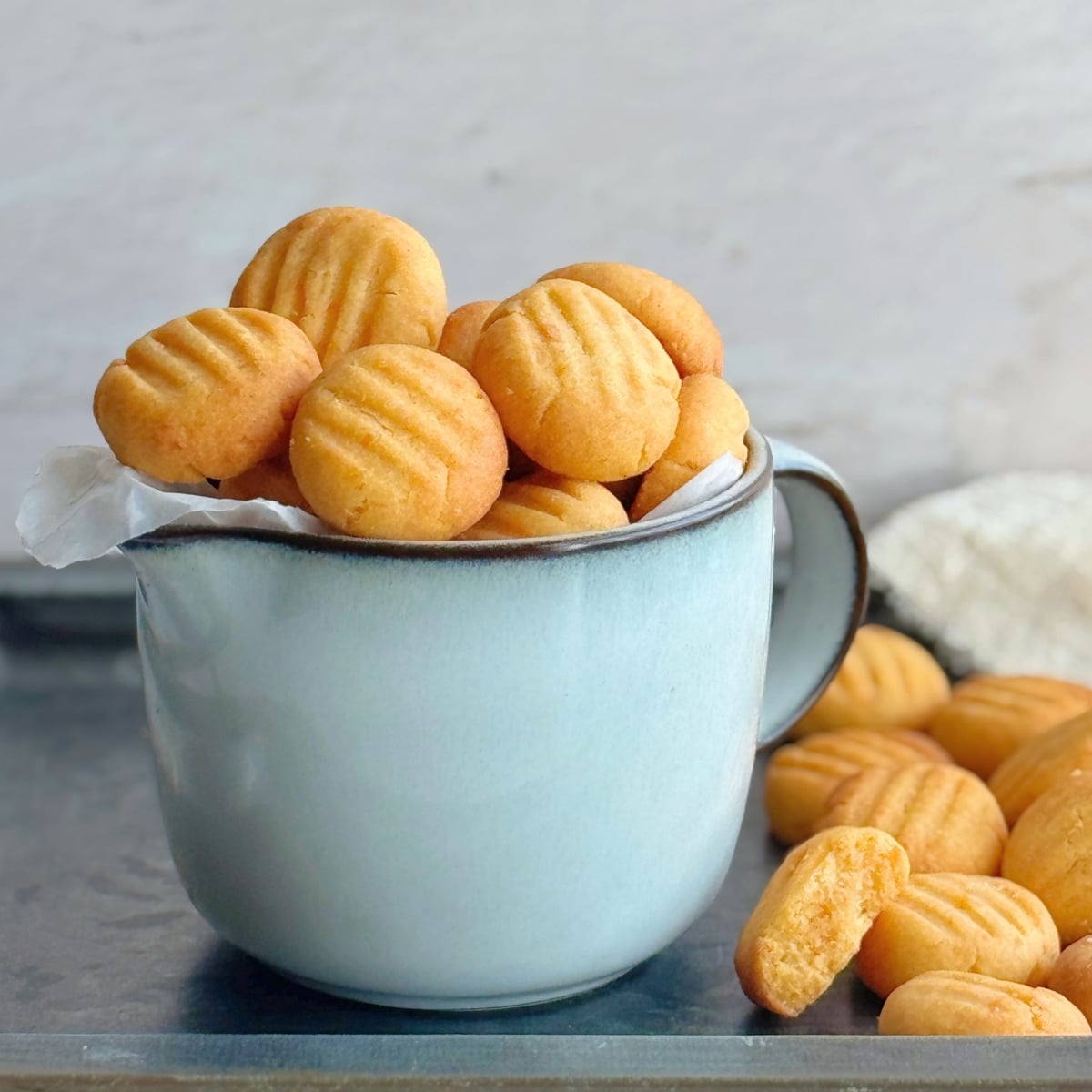
Store the cookies in an airtight container at room temperature. They stay crisp for about 3 days. After that, they lose some of their crispness but still stay firm.
Recipe
Mini Sweet Potato Butter Cookies
Watch how to make the recipe
- ⅔ cup (150 g) unsalted butter, melted and cooled for 5 minutes
- ½ cup (60 g) powdered sugar (icing sugar)
- ¼ cup (60 g) roasted sweet potato, mashed smooth and cooled
- 1½ cups (187 g) all-purpose flour (plain flour)
- ½ teaspoon salt (use ¼ teaspoon if using salted butter)
- ½ teaspoon vanilla extract (optional)
- ¼ teaspoon ground cinnamon (optional)
- Preheat the oven to 350°F (180°C) or 160°C fan about 15 minutes before the cookies go into the oven. Line a baking sheet with parchment paper.
- Melt the butter and leave to cool for 5 minutes. Add the powdered sugar and stir until smooth.
- Add the mashed sweet potato and vanilla, if using. Stir until evenly combined.
- In a separate bowl, whisk together the flour, salt and cinnamon, if using.
- Add the flour mixture to the sweet potato mixture and fold with a spatula until mostly combined.
- Use your hands to gently bring the mixture together into a soft dough.
- Portion the dough into 8 g (about 1 teaspoon) pieces and roll into balls. Place them about 2 inches (5 cm) apart on the prepared baking sheet.
- Gently press the top of each cookie with a fork.
- Bake for 10–12 minutes. Remove from the oven and leave the cookies on the baking sheet for 5 minutes.
- Transfer to a wire rack and leave to cool completely. The cookies will firm up as they cool.
- Sweet potato: Roast the sweet potato plain, without oil, butter or seasoning. Remove the peel and mash with a fork until smooth. Leave to cool before measuring ¼ cup (60 g).
- Vanilla and cinnamon: I didn’t use vanilla or cinnamon because I wanted the sweet potato to be the main flavor. You can add ½ teaspoon vanilla extract or ¼ teaspoon ground cinnamon, or both.
- Make ahead option: Prepare the dough, cover and refrigerate for up to 2 days. You can also portion and roll it into 8 g balls before refrigerating. If the dough is too firm to press, leave it at room temperature for 5–10 minutes. If it presses easily straight from the fridge, bake straight away. Cookies baked straight from the fridge may need an extra 1–2 minutes.
- Storage: Store in an airtight container at room temperature. The cookies stay crisp for about 3 days. After that, they lose some of their crispness but stay firm.
For another mini cookie recipe, try my 3 Ingredient Mini Butter Cookies.

Hungry for more?
Sign up for my free newsletter to get emails about new recipes .And don't forget to follow me on YouTube, Facebook, Pinterest, and Instagram for all the latest deliciousness.

Yvonne Fowler says
Can I use granulated date Sugar or granulated maple sugar or granulated coconut sugar instead of powdered sugar?
The Gardening Foodie says
Hi Yvonne, powdered sugar works best for this recipe, but you can substitute it with one of the sugars you've mentioned. Here's how each one may affect the cookies.
Date sugar: The cookies may be a little grainy and thicker, with less spreading during baking.
Maple sugar: This is probably the closest alternative to powdered sugar, although the cookies may spread a little more.
Coconut sugar: The cookies may bake to a darker color, have a slightly grainy texture, and spread less, making them a little thicker.
Of the three, I'd go with maple sugar. I'd recommend grinding it into a fine powder first to help give the cookies a smoother texture.
And if you have any tapioca starch, you could try grinding 60 g (about ⅓ cup) of maple sugar with ½ teaspoon of tapioca starch into a fine powder. The tapioca starch helps prevent clumping and makes the mixture more like store-bought powdered sugar, which may help give the cookies a finer texture.
You can keep the baking temperature the same, but watch the cookies toward the end as they may brown differently.
I hope this helps. Happy baking!