
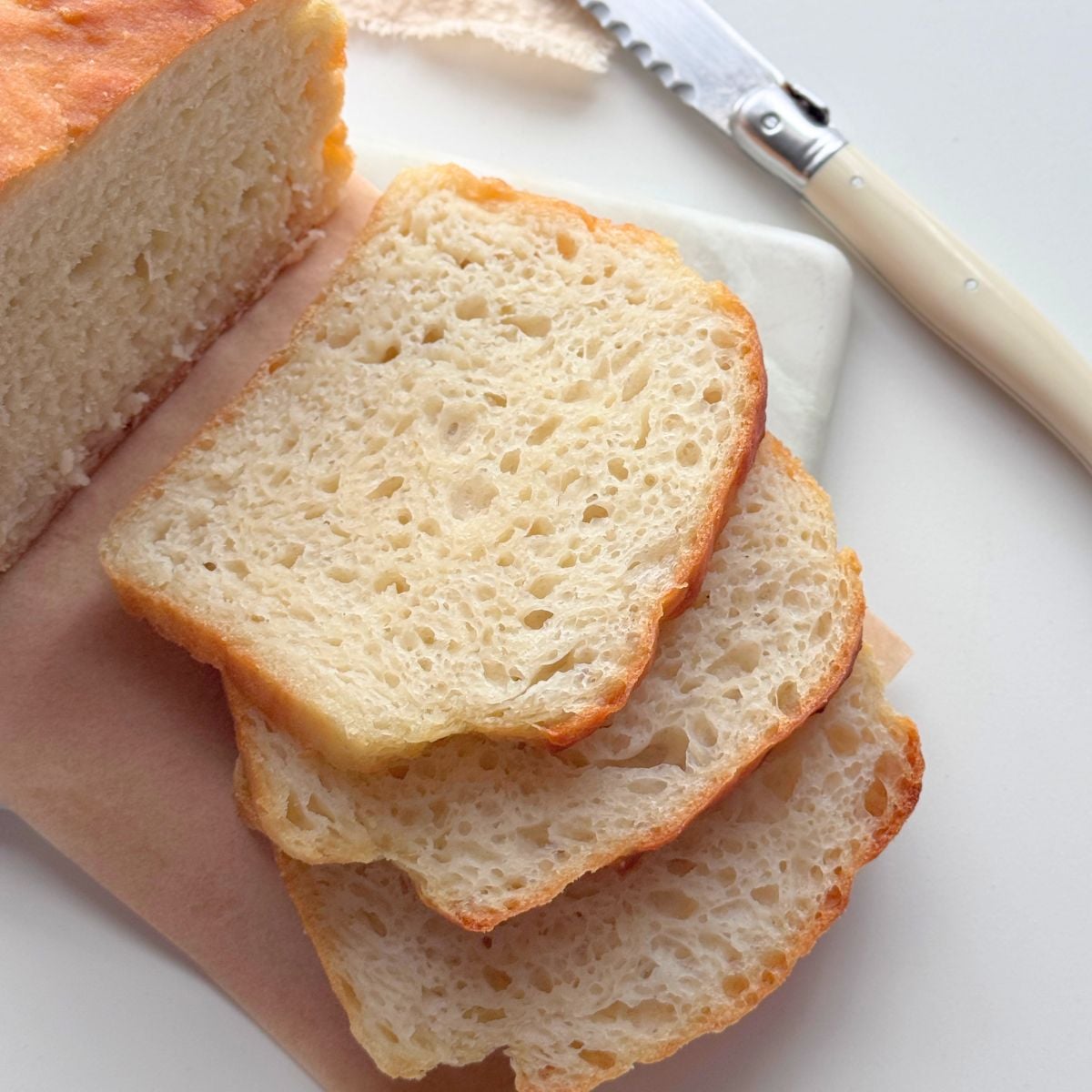
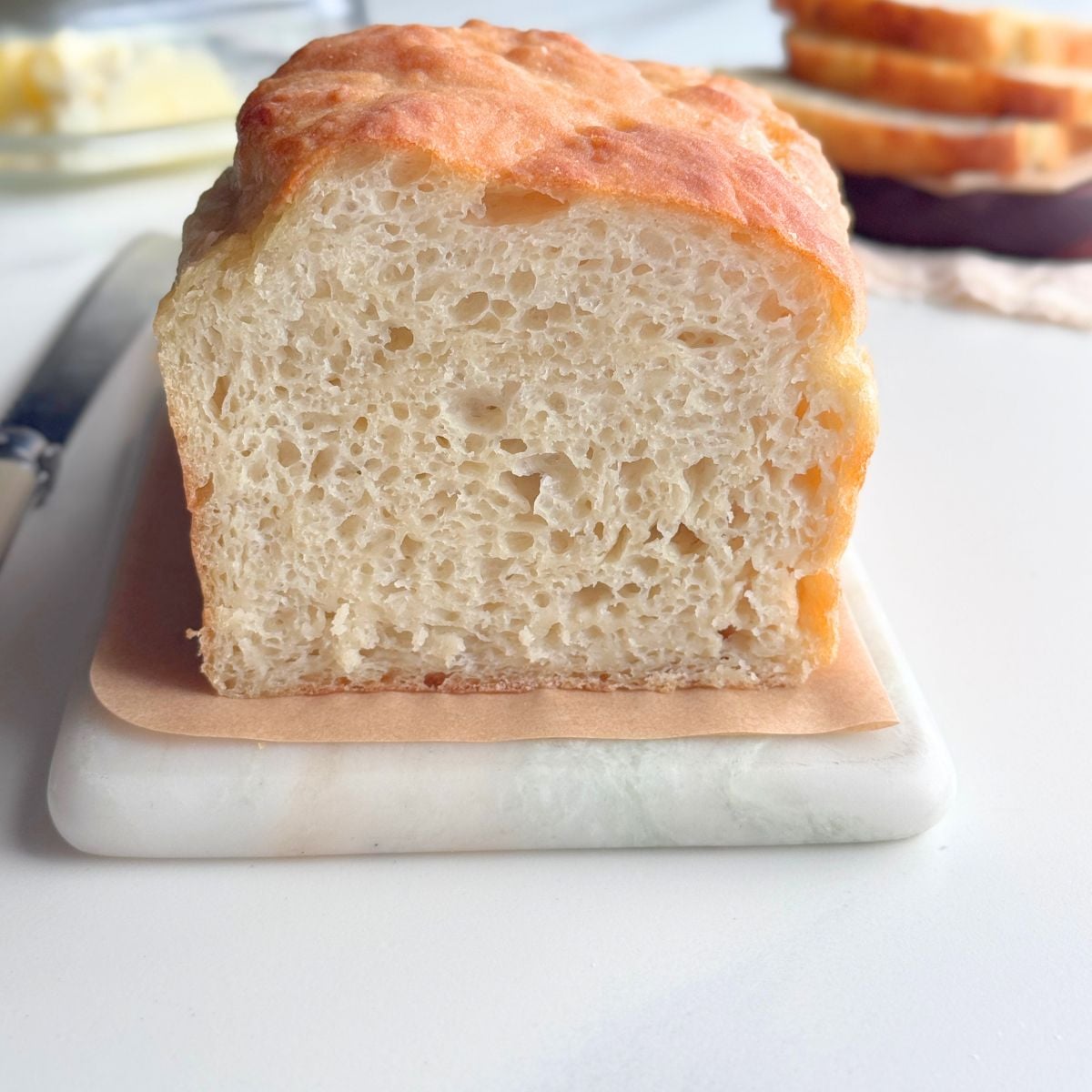
Just 4 ingredients and no kneading or shaping, simply mix, rise, and bake. Soft and airy with a light, slightly chewy texture that toasts beautifully.
Step by step photos
These visual instructions help you see the process. You can also find the full printable recipe with ingredient amounts and instructions at the end of the post.
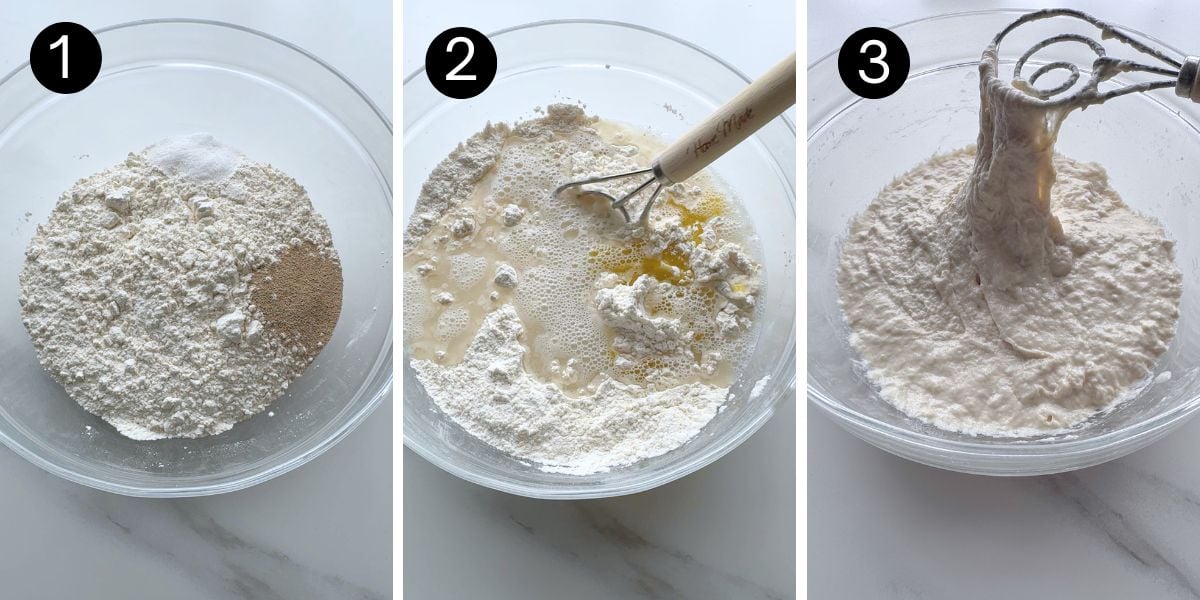
- Add the flour, yeast, and salt to a bowl.
- Pour in the warm water and mix until no dry flour remains.
- The dough will be very soft and sticky, don’t worry, this is perfect.
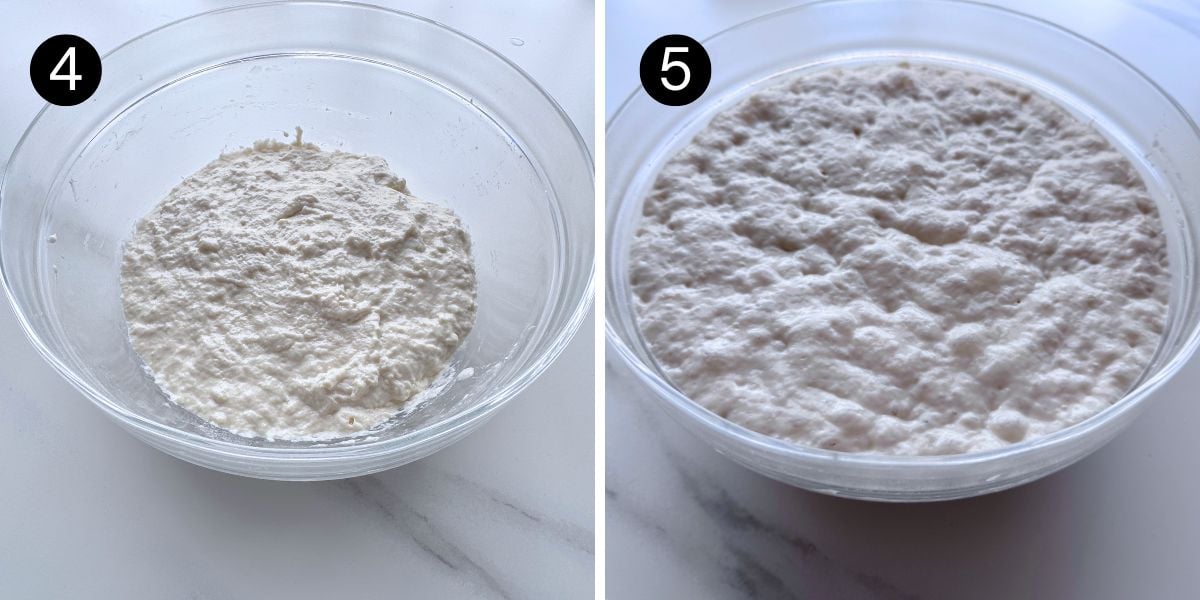
- Cover and leave to rise for about 2–3 hours.
- Once risen, the dough should look puffy, full of bubbles, and slightly wobbly. Do not mix or press it down.
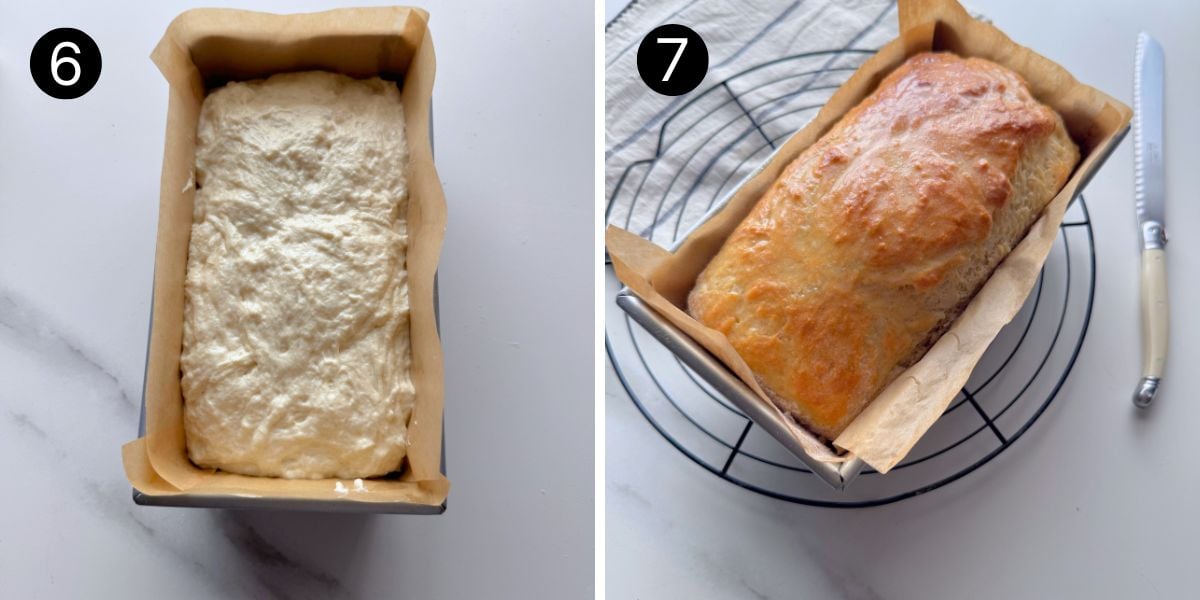
- Gently transfer the dough into a lined loaf pan. Do not press or shape it. You can gently shake the pan if needed to help it spread.
- Bake for 30-35 minutes until golden brown on top.
Optional: Brush with butter while warm for a softer crust. Let it cool completely before slicing.
Storage
Store in an airtight container at room temperature for up to 2 days, or in the fridge for up to 4–5 days. Warm or toast before serving.
Overnight Rise (Optional)
Cover the dough and place it in the fridge for 8–12 hours. The next day, let it come to room temperature for about 30–45 minutes before transferring to the loaf pan.
This option gives slightly better flavor and texture.
It also makes the dough easier to handle and you can bake at a time which works for you.
Tips
Flour choice: Bread flour works best for this recipe as it gives the bread better structure and a slightly chewy texture.
If you only have all-purpose flour, you can still make this bread, it will be a bit softer, but still good. Do not change the amount of water when using all-purpose flour.
Use warm water (about 105–110°F / 40–43°C). It should feel comfortable to the touch, not hot.
The dough will be very sticky: This is normal. Do not add extra flour, or the bread can turn dense.
If your kitchen is warm, the dough may be ready sooner (closer to 2–2½ hours). In a cooler space, it can take up to 3 hours. Try not to let it rise much longer than this, as the dough can overproof. This means it loses strength and won’t rise as well in the oven, which can give a flatter loaf.
Why the longer rise time? This is a very soft dough with more water than regular bread dough. The longer rise gives it time to develop air bubbles and structure, which helps create a soft, airy loaf. Rushing this step can lead to a denser result.
Handle gently: Avoid mixing or pressing the dough after it has risen. This helps keep the bread light and airy.
Final rest is short: Let the dough rest in the loaf pan for 20 minutes, just until slightly puffy. Don’t wait for it to double.
Let it cool before slicing: Cutting too soon can make the inside feel slightly sticky. Let it cool for at least 1 hour for the best texture.
Recipe
4 Ingredient No-Knead Bread (No Shaping)
Watch how to make the recipe
- 4 cups (480 g) bread flour (or all-purpose flour)
- 1 teaspoon (3g) instant yeast
- 1½ teaspoons salt
- 2 cups (480) ml warm water (about 105–110°F / 40–43°C)
- 1 Tablespoon olive oil (optional)
- In a large bowl, add the flour, yeast, and salt.
- Pour in the warm water and mix until no dry flour remains. The dough will be soft and sticky.
- Cover the bowl and leave to rise for about 2–3 hours, until the dough looks puffy and full of bubbles. (see note 1)
- Do not mix or press the dough after it has risen.
- Gently transfer the dough into a lined 9 × 5 inch (23 × 13 cm) loaf pan. Do not press or shape it. Gently shake the pan if needed to help it spread.
- Let the dough rest in the pan for about 15-20 minutes while the oven heats.
- Bake at 350°F (175°C) for 30–35 minutes, until golden brown on top. (see note 2) Optional: Brush with butter while warm for a softer crust.
- Let cool completely before slicing.
- Rise time: In a warm kitchen, the dough may be ready sooner (about 2–2½ hours). In a cooler space, it can take up to 3 hours. Do not let it rise much longer, as it can overproof and bake up flatter.
- Oven type: If using a convection oven, bake at 320°F (160°C fan)
Hungry for more?
Sign up for my free newsletter to get emails about new recipes .And don't forget to follow me on YouTube, Facebook, Pinterest, and Instagram for all the latest deliciousness.



Leave a Reply