Lemon Pudding Cakes
servings4 servings
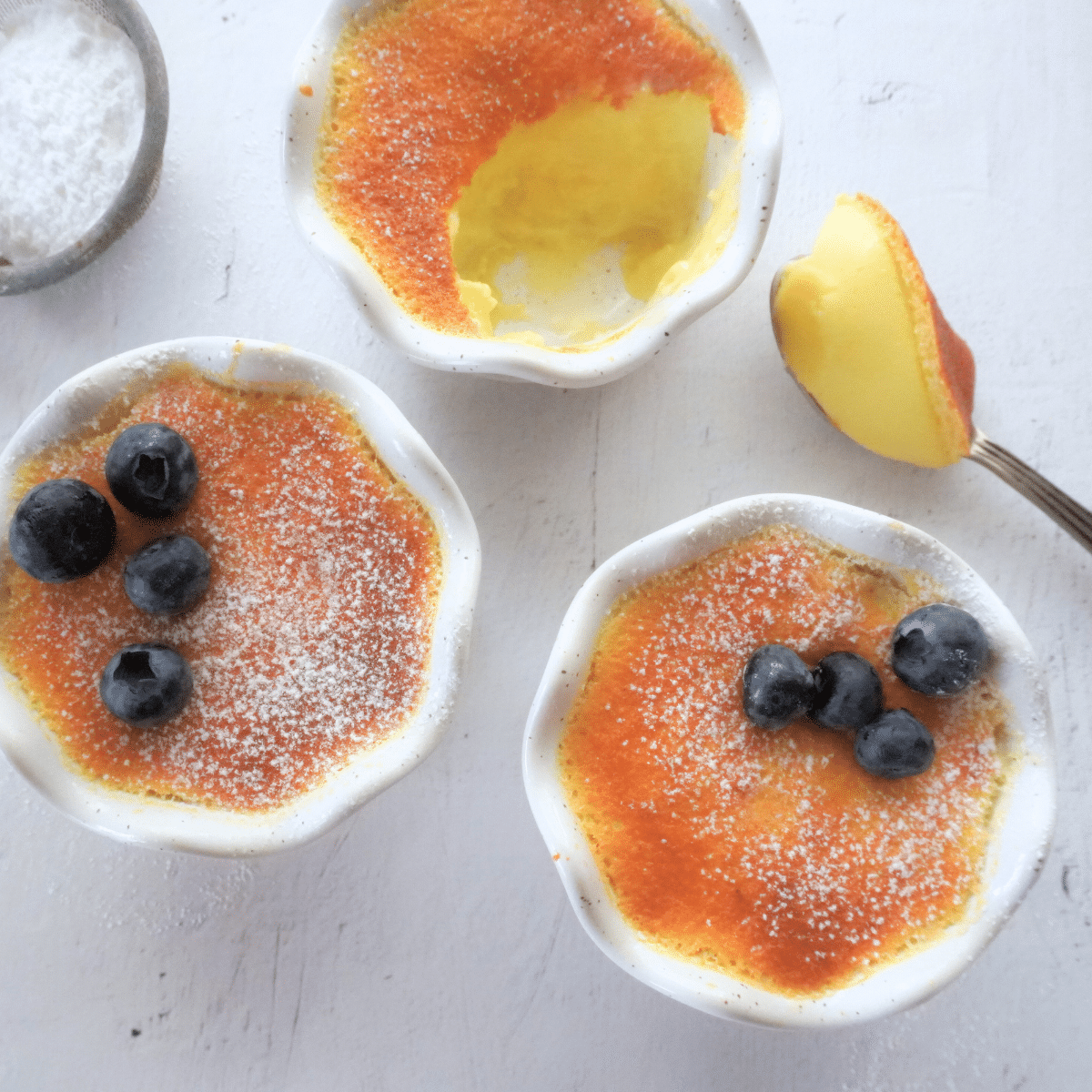
These Lemon Pudding Cakes need only 6 ingredients to create one batter that magically separates into two delicious layers.
Ingredients
- ½ cup (100g) white granulated sugar
- 2 large eggs, separated
- 1 Tablespoons lemon zest
- 3 Tablespoons (40g )butter, melted
- 2 teaspoons 10ml lemon juice (at room temperature) (see note 1)
- 2 ½ Tablespoons 20g all purpose (plain) flour
- 1 cup milk, at room temperature Use whole milk for the richest taste but lower-fat or nondairy milk works too.
Instructions
- Spray four ramekins - 4 oz (½ cup or 120 ml) with nonstick cooking spray (See note 2 for ramekin sizes)
Egg yolk mixture
- In a large bowl, beat together sugar, lemon zest and egg yolks. Beat for about 4 to 5 minutes until it turns pale or light in color.
- Pour in the melted butter and lemon juice - beat for one minute
- Add all purpose flour (plain flour) - beat for about 30 seconds to combine
- Pour in the milk and mix until just combined - set the bowl aside
Beat egg whites
- In a separate bowl beat the egg whites on medium speed about 4 - 5 minutes .
- When you lift the beaters out, the peaks should be stiff. Be careful not to overbeat the egg whites past this stage. Or the result will be curdled egg whites.
Transfer beaten egg whites to yolk mixture
- Use a spatula to transfer the beaten egg whites to the yolk mixture. Fold the beaten whites gently into the yolk mixture with a spatula.
- It's perfectly fine if you see a few specks of egg white on the surface. You don't want to overbeat it. The batter will be light, foamy, and liquidy.
Preheat the oven
- Preheat the oven now to 325° F / 170°C (150°C if you are using a fan assisted oven) and set a rack in the middle position
Fill batter into ramekins
- Place the ramekins into a baking pan with high sides. Spoon the batter evenly into each one—it’ll come close to the top, and that's perfectly fine because it won’t overflow during baking.
Water bath (don't skip this step) - see note 3
- Pour room temperature (tap water is fine) water into the baking pan to reach halfway up the sides of the ramekins
Bake
- Bake for between 30 - 38 minutes, or until the cakes are puffy and lightly golden on top. My oven tends to bake quickly, so I typically remove them after 32-33 minutes.
- If they start browning too fast, just tent some foil over the bowls without letting it touch the cakes about halfway through baking. It’s perfectly fine to open the oven for this—the cakes won’t sink, as long as it’s just for a few seconds.
Cool
- Once baked, carefully remove the ramekins from the baking dish and let cool on a rack for about 20 minutes before serving.
- Cooling the lemon pudding cakes helps the pudding part set and thicken. If you cut into them right away, the pudding might be too runny. Letting them cool lets the pudding firm up and makes them taste better.
- They will sink a bit as they cool, that's okay. Dust with powdered sugar and serve with berries, if you like.
- You can serve warm or refrigerate and serve cold.
- Storing: Cover leftover cakes tightly and refrigerate for up to 3 days.
- * Refer to the visual instructions in the post above for a guide on what each step of the recipe should look like.
Recipe Notes
1.Before you start baking: Ensure your ingredients (eggs, lemon juice, milk,) are at room temperature. If they’re too cold, they can cause the butter to solidify or make the egg whites deflate.
2. Ramekin sizes: For this recipe, I used 4 ramekins, each with a 4 oz (½ cup or 120 ml) capacity.
- To check the size of your ramekins, fill one with water and pour it into a measuring cup. If yours are a different size, no problem—you can still use them! Just adjust the amount of batter you pour in, keeping in mind:
- An 8 oz ramekin holds 1 cup (240 ml).
- A 4 oz ramekin holds ½ cup (120 ml)
- A 6 oz ramekin holds ¾ cup (180 ml
- A water bath is a technique used in baking, especially for delicate desserts like these lemon pudding cakes.
- You place your ramekins into a larger pan filled with water, which gently heats up and surrounds the cakes as they bake.
- This method ensures the cakes cook evenly, staying soft and smooth without cracking
Nutrition
Serving: 1serving | Calories: 258kcal | Carbohydrates: 32g | Protein: 5g | Fat: 13g | Saturated Fat: 7g | Polyunsaturated Fat: 1g | Monounsaturated Fat: 3g | Trans Fat: 0.4g | Cholesterol: 112mg | Sodium: 122mg | Potassium: 135mg | Fiber: 0.3g | Sugar: 28g | Calcium: 93mg | Iron: 1mg